Majnesvon Bunk Beds That Fit Real Kids' Rooms
This line covers twin over twin floor bunk beds designed for shared kids' bedrooms with standard ceiling heights. All six models share the same footprint and low-profile frame — the differences are finish color and frame material — so you're picking the look that works for your room, not navigating wildly different products. They're built for families who need a bunk bed that assembles without drama, holds the weight it claims to hold, and doesn't leave the top bunk guardrail feeling like an afterthought.

All Six Models, Side by Side
Twin Floor Bunk Bed (Gray)
See on Amazon
Solid Wood Bunk Bed (White)
See on Amazon
Solid Wood Bunk Bed (Gray New)
See on Amazon
Twin Floor Bunk Bed (Espresso)
See on Amazon
Twin Floor Bunk Bed (Espresso New)
See on Amazon
Twin Floor Bunk Bed (Natural)
See on AmazonModel Comparison at a Glance
All six models share the same footprint and bunk configuration — the differences are finish, frame weight, and construction material. Use this table to zero in on the right one for your room and setup.
| Model | Color / Finish | Weight | Frame Material | Dimensions (L×W×H) | Rating | Best For |
|---|---|---|---|---|---|---|
| B0B3CR3TXX | Grey | 80 lbs | Bed frame (lighter build) | 79.3 × 42.1 × 46.5 in | 4.5 / 5 (74 ratings) | Solo assemblers or anyone moving the bed between rooms; most reviewed model in the line |
| B0B3C98N7Q | White | 92.5 lbs | Solid wood frame | 79.3 × 42.1 × 46.5 in | 4.1 / 5 (12 ratings) | Brighter rooms; solid wood priority; kids who prefer a clean white look |
| B0BZHPGWLF | Gray (New) | 92.5 lbs | Solid wood frame | 79.3 × 42.1 × 46.5 in | 4.7 / 5 (5 ratings) | Neutral finish that works with most bedroom furniture; updated gray colorway |
| B0DF7HM1RY | Espresso | 92.5 lbs | Solid wood frame | 79.3 × 42.1 × 46.5 in | 4.6 / 5 (5 ratings) | Rooms with darker floors or warm-toned furniture; richer finish appearance |
| B0DF7J8HZ8 | Espresso (New) | 92.5 lbs | Solid wood frame | 79.3 × 42.1 × 46.5 in | 4.3 / 5 (4 ratings) | Updated espresso colorway; same structural spec as original Espresso model |
| B0DF7G7XG9 | Natural (New) | 92.5 lbs | Solid wood frame | 79.3 × 42.1 × 46.5 in | Not yet rated | Light wood look; pairs well with Scandinavian or minimalist room styling |
If you have enough hands for a two-person assembly and solid wood construction matters to you, any of the 92.5-lb solid wood models deliver it — pick your finish based on the room. If you're assembling solo or want the most-reviewed option in the line, the 80-lb Grey model (B0B3CR3TXX) is where to start.
How to Pick the Right Model for Your Room
Every Majnesvon bunk bed in this line shares the same overall dimensions: 79.3 inches long, 42.1 inches wide, and 46.5 inches tall. That 46.5-inch height is the number that matters most before you order — measure from your floor to ceiling and confirm you have enough clearance for a child to sit upright on the top bunk comfortably. In a standard 8-foot (96-inch) ceiling room, you're working with roughly 49 inches of clearance above the top bunk surface, which is workable for most kids. In a room with a drop ceiling, a low beam, or a ceiling fan directly overhead, measure twice.
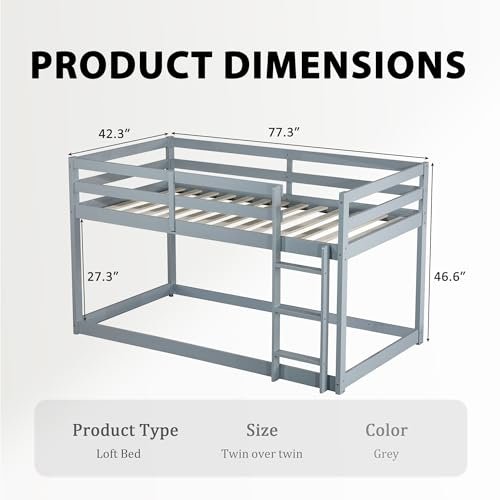
Once you've confirmed fit, the real decision is frame material and finish. The Grey model (B0B3CR3TXX) is the lightest of the line at 80 pounds — a meaningful difference if you're assembling solo or moving the bed between rooms — and uses a different structural approach than the heavier solid wood frames. The four "solid wood" models (White, Gray New, Espresso, Espresso New, and Natural New) all weigh 92.5 pounds and feature solid wood construction with full guardrails. If solid wood construction and finish durability are priorities — especially in a room shared by active kids — the heavier solid wood frames are worth the extra weight at assembly time.
On color: Espresso reads warmer and darker, which pairs well with darker floor tones or furniture. White and Natural read brighter and work better in smaller rooms where you want to keep things from feeling heavy. The Gray options sit in the middle. The "New" color variants (Gray New, Espresso New, Natural New) are updated colorways on the same basic frame spec — if you're comparing them to earlier versions you've seen reviewed, the structural specs are the same.
What These Beds Actually Look Like in Use
The floor bunk design — meaning the lower bunk sits directly on the floor rather than elevated on legs — is the defining feature of this line, and it shapes how the bed fits into a room. The lower bunk being at floor level means no storage space underneath, which is a real trade-off compared to elevated bunk designs. But it also means the top bunk is lower than a standard elevated bunk, which makes the climb shorter for younger kids and keeps the total height manageable under a standard ceiling. If under-bed storage is important to your setup, this isn't the right design — look at elevated frames with storage drawers instead.
The integrated ladder is built into the frame on all models. This matters practically because separate clip-on ladders are one of the first things to feel unstable on budget bunk beds — an integrated ladder with solid rungs is a different experience. The full-length guardrails on both sides of the top bunk are the other detail worth noting. Guardrails that only cover one side, or that cover half the length of the bunk, are a common cost-cutting move in this category. Both sides, full length, means a sleeping child isn't rolling toward an exposed edge regardless of which side of the top bunk they favor.
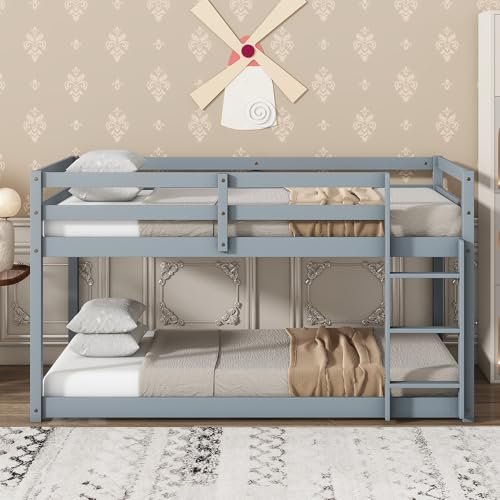
These beds are sized for standard twin mattresses. No box spring is required — the slat system built into the frame provides the support a box spring would otherwise give. A standard twin mattress (38 × 75 inches) fits directly on the slats. If you're using a twin XL mattress, the frame's 79.3-inch interior length accommodates it, but confirm the mattress dimensions match before ordering.
Assembly, Safety Checks, and Keeping It Solid
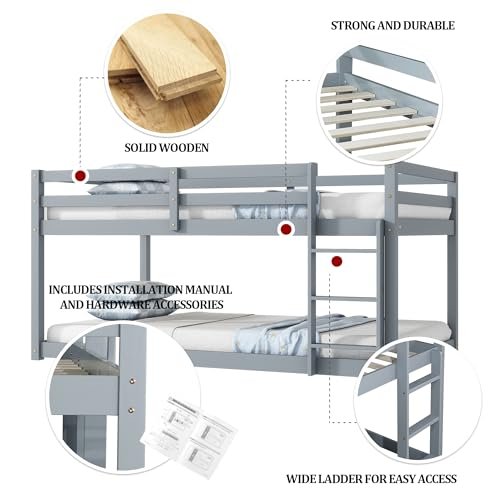
The bed frame and all required hardware ship in the box — you won't need a separate hardware run. The solid wood models weigh 92.5 pounds total, and the final frame assembly (particularly lifting and positioning the top bunk) is a two-person job. Plan for it. Trying to manage the top frame section alone is where assembly frustrations and structural mistakes tend to happen. Block out an hour and have a second set of hands ready.
The assembly steps that matter most for structural integrity are the guardrail attachment points and the slat lock connections. These are the joints that carry the most stress during use. Work through them carefully — don't skip steps to get to the end faster. Once assembled, the per-bunk weight ratings are firm numbers: the upper bunk is rated to 350 lbs, and the lower bunk is rated to 400 lbs. These are separate ratings, not a combined figure. A standard-weight adult and a child's mattress together fall comfortably within the upper bunk limit. Two adults on the lower bunk together also fall within its rating. Don't exceed either figure, and don't treat the ratings as interchangeable between bunks.
- After assembly: Physically test each guardrail by pressing laterally — it should have no give at the attachment points.
- Check slat seating: Every slat should sit fully in its slot before the mattress goes on. A partially seated slat is the most common source of the creaking and shifting complaints you'll see in budget bunk bed reviews.
- Moisture matters for MDF panels: The structural frame is solid wood, but panel surfaces use MDF, which is sealed with a protective lacquer finish. The beds are designed for dry indoor environments. A basement room with humidity issues or a bathroom-adjacent wall isn't the ideal placement for this frame.
- Tighten hardware at 30 days: Wood and engineered wood settle slightly after the first month of use. A quick check and re-tighten of the main bolts at the 30-day mark keeps everything snug long-term.
One honest note for buyers considering this for very young children: the top bunk ladder and guardrails are designed for kids who are old enough to climb independently and understand the height. ASTM F1427, the US bunk bed safety standard, specifies guardrail height and coverage requirements — full-length coverage on both sides is exactly what that standard calls for. That said, most child safety guidelines recommend bunk beds for children 6 and older. Below that age, the lower bunk is the right call.
Frequently Asked Questions
Do I need to buy a box spring for either bunk?
No. Both bunks use a built-in slat system that supports a standard twin mattress directly. A box spring won't fit in this configuration anyway — just place the mattress on the slats and you're set. Confirm your mattress is a standard twin (38 × 75 inches) or twin XL; the frame's 79.3-inch length accommodates both.
Is this bed actually low enough for a standard 8-foot ceiling?
Yes. The total frame height is 46.5 inches, which means in a room with an 8-foot (96-inch) ceiling, you have roughly 49 inches of clearance above the top bunk surface — enough for most kids to sit upright. If your room has a drop ceiling, a ceiling fan directly above the bed, or exposed beams, measure before you order. Those situations cut into clearance in ways a flat ceiling doesn't.
What are the weight limits, and do they apply to each bunk separately?
Yes — they're separate ratings, not a combined total. The upper bunk is rated to 350 lbs; the lower bunk is rated to 400 lbs. In practical terms: a child and their mattress easily fall within the upper bunk limit, and two adults using the lower bunk as a guest bed are within its rating as well. Don't treat the numbers as interchangeable between bunks.
Can I assemble this by myself, or do I really need two people?
You can get through most of the assembly solo, but the final step — positioning and securing the top bunk frame — is genuinely a two-person job. The solid wood models weigh 92.5 lbs total, and managing the top section alone creates the kind of awkward situation where something gets dropped or a connection point gets rushed. Budget an hour and have a second set of hands available for that stage. All hardware is included in the box.
What's the difference between the original colorways and the "New" versions?
The "New" suffix (Gray New, Espresso New, Natural New) indicates an updated colorway on the same basic frame construction and dimensions. If you've seen reviews of the original Espresso or Gray models, the structural specs carry over — you're not getting a different product, just a refreshed finish. The ratings on the New variants are lower simply because they're newer listings with fewer reviews, not because the build changed.
Is this bed safe for a 4- or 5-year-old on the top bunk?
The full-length guardrails on both sides of the top bunk meet the coverage that ASTM F1427 — the US bunk bed safety standard — specifies, so the bed itself is designed with top-bunk safety in mind. That said, most child safety guidelines recommend bunk beds for children 6 and older, regardless of guardrail design, because younger kids are more likely to climb in ways a guardrail can't fully account for. If your child is under 6, use the lower bunk until they're old enough to climb and sleep on the top level independently.