Majnesvon 6-Foot Fiberglass Step Ladders
Majnesvon's fiberglass step ladder line covers the two most common household and worksite needs: a 300-lb-rated option for standard home use and a 500-lb-rated option for heavier users or more demanding jobs. Both are 6-foot folding ladders built on a fiberglass frame — the same basic design, but with meaningfully different load ratings that affect who should be standing on each one. If you've been trying to figure out which version is actually right for your situation, that's exactly what this page is for.

Both Ladders, Side by Side
6-Foot Fiberglass Ladder (Yellow)
See on Amazon
6-Foot Fiberglass Ladder 500lb (Red)
See on AmazonSee more products
Discover the full product lineup with current selection on Amazon.
All products on AmazonSide-by-Side Specifications
Both ladders share the same frame dimensions and weight — the critical difference is the load capacity and color designation. Here's everything side by side.
| Model | Load Capacity | Frame Material | Folded Dimensions | Weight | Best For |
|---|---|---|---|---|---|
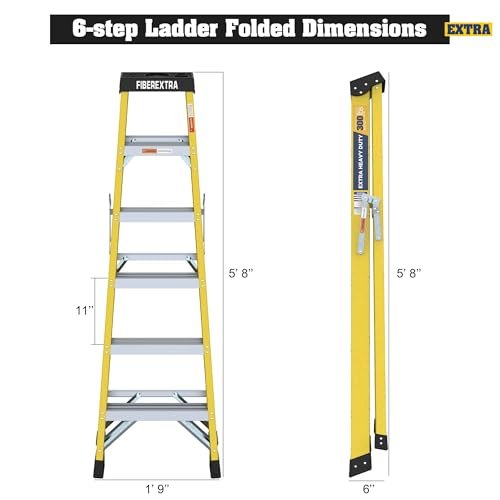
| 6-Foot Fiberglass Step Ladder (Yellow) | 300 lbs (Type IAA) | Fiberglass | 20.47 × 4.99 × 67 in | 17.86 lbs | Standard household tasks — painting, fixture replacement, high-shelf access — for users whose body weight plus gear stays under 300 lbs |
| 6-Foot Fiberglass Step Ladder (Red) | 500 lbs (Type IAA) | Fiberglass | 20.47 × 4.99 × 67 in | 17.86 lbs | Heavier users, frequent use, or anyone who regularly carries substantial tools or materials and needs the extra load margin |
If you're right on the edge of the 300-lb limit when you factor in gear, go with the red model — the 500-lb rating gives you margin that's worth having, and you're not giving up anything in size or portability to get it.
How to Choose Between 300 and 500 Pounds
The load rating on a step ladder isn't just the maximum weight of the person standing on it — it includes everything you're carrying. That means your body weight plus your tool belt, paint bucket, box of light bulbs, or bag of supplies. If you're a 180-lb person carrying 40 lbs of gear, you're working with 220 lbs of actual load. That's well within the 300-lb yellow model's range. But if you're closer to 250 lbs and regularly work with heavy tools, the red 500-lb version is the right call.
Here's how to think about it by ladder type rating. Type IAA is the designation used for the 300-lb yellow model — it's the standard for heavy-duty household and light commercial use, covering most home improvement tasks, painting, changing fixtures, and reaching high shelves or ceilings. The red model's 500-lb rating represents an even higher duty classification — the kind of spec you'd see specified on commercial job sites or in professional trade contexts where heavier users and heavier loads are the norm.
- Pick the yellow (300 lb) if: you're a typical adult user doing standard home tasks — painting walls, swapping out light fixtures, reaching into attic storage, cleaning gutters from a single story.
- Pick the red (500 lb) if: your body weight plus tools and materials regularly approaches or exceeds 250 lbs, or you're using the ladder in a semi-professional or frequent-use context where the higher rating gives you the margin you need.
- Both are fiberglass: fiberglass doesn't conduct electricity, which matters if you're working near wiring, panel boxes, or overhead electrical lines. Neither model is aluminum — that's a deliberate choice for safety around live circuits.
One more thing worth noting: both ladders weigh 17.86 lbs and share identical dimensions (20.47 × 4.99 × 67 inches folded). The load rating is the meaningful difference between these two models — not the size, not the footprint, not the storage profile.
Where These Ladders Actually Get Used
A 6-foot step ladder is the most practical all-around height for standard American homes with 8- or 9-foot ceilings. At 6 feet of ladder height, a person of average height standing on the second or third step from the top has comfortable, controlled reach to the ceiling, the top of a doorframe, or a high cabinet. It's not an extension ladder — it's not for exterior second-story work — but it covers the overwhelming majority of tasks that come up in a typical household over the course of a year.
Common real-world uses for this ladder:
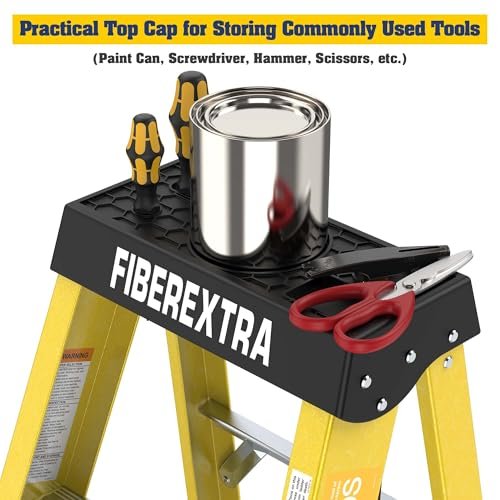
- Painting walls and ceilings in rooms with 8–10 foot ceilings
- Replacing recessed lights, ceiling fans, or smoke detectors
- Accessing top shelves in garages, closets, or pantries
- Hanging curtain rods, artwork, or shelving at height
- Cleaning ceiling fans or high windows
- Light HVAC filter changes where the unit is ceiling-mounted
The folding design is what makes these practical for apartments and smaller homes — at under 5 inches folded depth, either model slides into a utility closet, behind a door, or along the side of a garage without taking up meaningful floor space. At 17.86 lbs, it's light enough for one person to carry and position without help. The fiberglass frame also means it won't corrode in a damp garage or basement storage area the way an aluminum frame can over time.
Safe Use and What Not to Skip
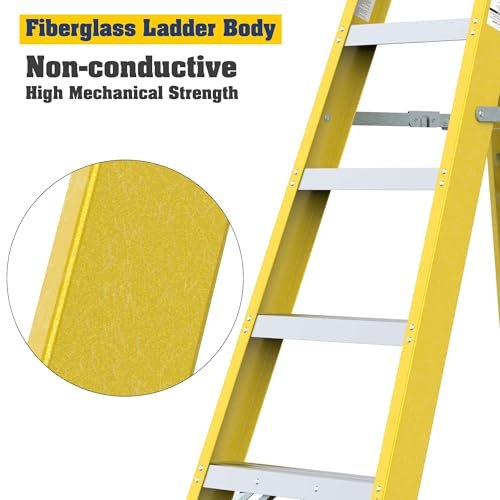
Fiberglass step ladders are among the safest ladder materials available for home use — the frame doesn't conduct electricity, it handles temperature changes better than aluminum, and it's resistant to corrosion. But material choice alone doesn't make a ladder safe to use. Most step ladder accidents happen because of how the ladder is set up or how it's used, not because the ladder failed structurally.
Before you climb either Majnesvon model:
- Open it fully. Both spreader bars (the hinged braces on each side) need to be locked in the open position before you step on the ladder. A partially open ladder can fold under load.
- Set it on a flat, stable surface. All four feet need contact with the ground. On uneven flooring, take a moment to adjust position before climbing.
- Stay off the top two steps. The top step and the step directly below it aren't rated as standing positions — they're for steadying, not standing. Maintain three points of contact (two feet and one hand, or one foot and two hands) while climbing.
- Don't exceed the load rating. Add your body weight to the weight of everything you're carrying before you decide which model to use. The yellow model's 300-lb rating and the red model's 500-lb rating include the person and the load together.
- Face the ladder when climbing. Don't reach sideways beyond your hip — move the ladder instead. Overreaching is the most common cause of step ladder falls.
For storage, fold the ladder completely and store it flat or hanging horizontally if possible. Leaning a folded step ladder against a wall for extended periods can stress the hinge points over time. Both ladders are designed for indoor and outdoor use, but if you're storing them outdoors long-term, keep them out of direct UV exposure — fiberglass handles weather well but extended sun exposure can degrade the surface finish over years.
Frequently Asked Questions
What's the actual difference between the yellow and red models?
Load capacity. The yellow ladder is rated to 300 lbs; the red is rated to 500 lbs. Everything else — the 6-foot height, fiberglass frame, folded dimensions (20.47 × 4.99 × 67 inches), and 17.86-lb weight — is identical between the two. The color coding is a practical cue: red signals the higher-capacity version. When you're calculating which one you need, add your body weight to the weight of any tools or materials you'll be carrying up with you.
Why fiberglass instead of aluminum?
Fiberglass doesn't conduct electricity. If you're working near wiring, circuit panels, or any overhead electrical source, a fiberglass ladder is significantly safer than aluminum. Even if you're not doing electrical work specifically, fiberglass is the default recommendation for household use precisely because most people don't know in advance when a task might put them near a live circuit. Fiberglass also handles temperature swings and damp storage conditions better than aluminum over time.
Will a 6-foot ladder reach my 9-foot ceiling?
Yes, comfortably, for most people. On a 6-foot ladder, you should be standing on the second or third step from the top — not the top step itself, which isn't rated as a standing position. A person of average height (5'6"–6') standing on the third step from the top will have their hands at roughly 9–10 feet, which covers standard ceiling work in rooms with 8- or 9-foot ceilings. For ceilings over 10 feet, you'd want an 8-foot ladder instead.
Does the ladder fold flat enough to store in a closet?
At 4.99 inches deep when folded, yes — either model slides into a standard utility closet, along the side of a garage, or behind a door without much trouble. At 17.86 lbs it's also easy to move and reposition by one person. The 67-inch folded height means you're looking for about 5.5 feet of vertical clearance in whatever storage spot you have in mind.
Can I use either of these ladders outdoors?
Yes — fiberglass handles outdoor conditions well. It won't corrode in rain or humidity the way some metals do, and it handles temperature changes without the expansion/contraction issues you can get with aluminum in extreme cold or heat. For extended outdoor storage, keep the ladder out of prolonged direct sun if possible — UV exposure over years can degrade the surface finish, though it won't affect the structural integrity of the frame in typical use timeframes.
Does the load rating include the weight of what I'm carrying, or just my body weight?
It includes everything — your body weight plus any tools, materials, or equipment you have on you while on the ladder. That's the standard definition of load capacity for step ladders. So if you weigh 220 lbs and you're carrying a 30-lb paint sprayer, you're working with a 250-lb load. The yellow 300-lb model handles that with margin. If you're closer to 260 lbs with gear, the red 500-lb model is the safer choice.